
1. What inspired you to create Community of Play, and what made Scarsdale the right place to bring your vision to life?
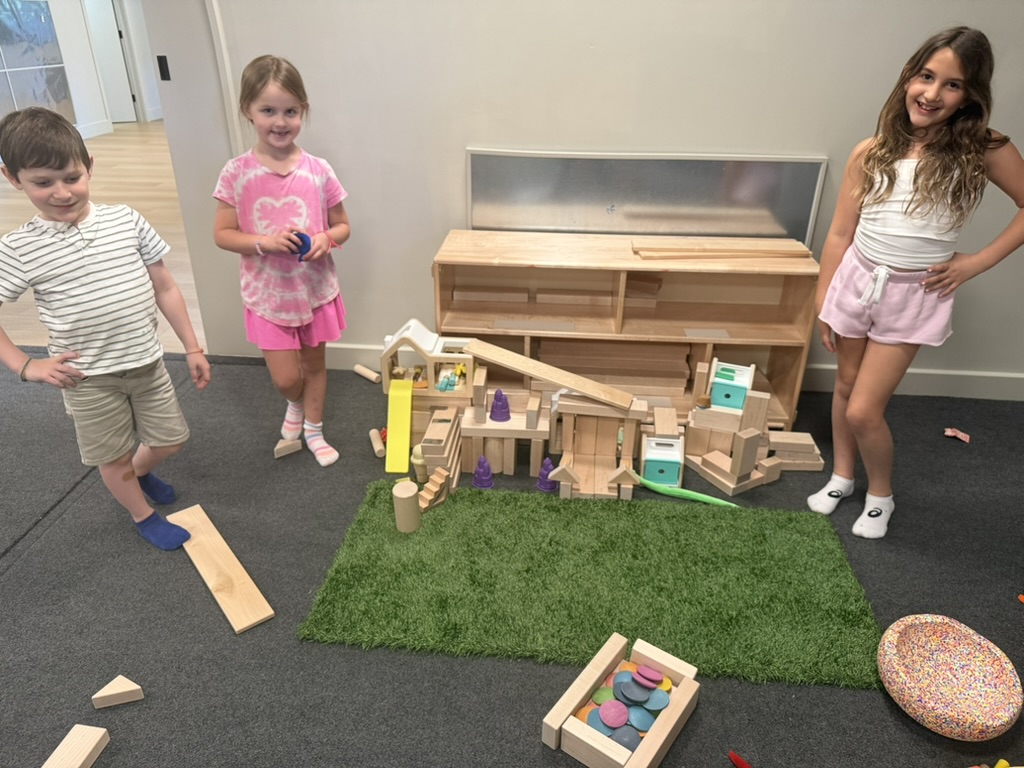 As a therapist working in early childhood development as both a special educator and a licensed clinical social worker as well as as perinatal mental health therapist, I kept seeing the same gap: families had access to activity classes, and they had access to therapeutic support, but almost nowhere brought those two worlds together under one roof. Truly thinking about the child in the context of their family and their environment. I wanted to build a space where play wasn’t just entertainment but where every class was intentionally thought out and planned. And, where children’s voices mattered and where we went back to basics in terms of play, conversation and interaction. I ran similar classes in the city at Bank Street College of Education and have always worked in a therapeutic team. That model really works because of the various therapeutic voices, ideas and perspectives. The collaboration is one of my favorite parts of my job. A large focus of my work is supporting children’s social/emotional, language and cognitive development. The most effective way is through meaningful interactions with peers and adults as well as exploration of the environment. I wanted to bring a touch of FloorTime therapy to all children.
Scarsdale made the most sense to me. At the time I had decided to move forward with opening CoP, I two young girls and I wanted a place to foster their development and be close to home. Most of my private practice was in Manhattan and Brooklyn. And I didn’t want to be far away from them anymore. I knew I could build something amazing here. Then, right after I signed the lease I found out I was pregnant with my third daughter. We opened in October 2023 and Goldie was born in December of 2023. It’s amazing watching my kids at CoP. They are such an inspiration to me.
Community of Play is so much more than a play space. How would you describe the experience you hope families have when they walk through your doors?
I want families to feel like they’ve walked into a space that feels like home. A place that understands both the joy and the exhaustion of raising young kids. For the child, I want it to feel magical. A place where mess is okay. A place where they can really find meaning in what is exciting for them. For the parents and caregivers, I want it to feel like relief. I want them they can exhale, because they know the adults around their child are trained to support exactly where that child is developmentally. A safe, non-judgemental space where no question is too small and there is no shame or embarrassment for discussing the parts of parenting that are not always the greatest. And I want it to be a place where parents connect with each other too. Raising kids isn’t meant to happen in isolation. We need a support system. This really brought us to continuing to develop what we offer for families. How do we incorporate self care, connection, meaningful friendships, fun events, all in one place? That is our goal and we will continue to listen to our community and grow!
Play is at the heart of everything you do. Why is play so important for children’s development, and what do you wish more parents knew about its impact?
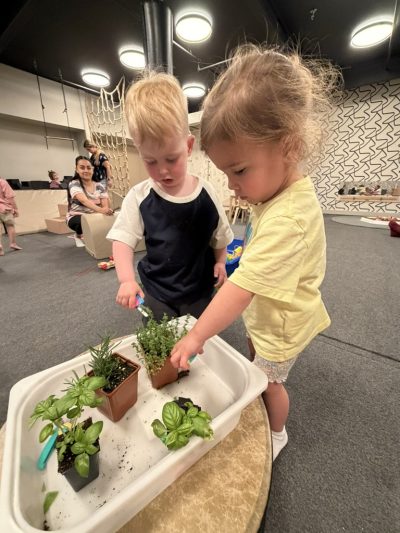
Play is the work of childhood. Plain and simple. It’s how kids build language, motor skills, emotional regulation, and social understanding, all at once, without it feeling like “work” to them. A lot of parents don’t realize that something as simple as back-and-forth play with an adult, what we call serve and return, is literally shaping brain architecture. When a child enters a room where toys, books, furniture, etc is set up for them it sends a message to them “I matter”. The reason our classes can feel unstructured is because babies and toddlers learn on the move (as do elementary kids!) but young ones need to touch and taste! What they are exploring. When we allow children to move freely and explore what sparks their interest, we allow them to build autonomy and confidence. Learning through play allows them to have organic “aha” moments. And, repetition is so important. Play allows for that. I wish more parents knew that they don’t need to engineer elaborate educational activities. The repetitive, silly, child-led moments like building a block tower for the tenth time, playing peekaboo are doing more for development than most flashcards ever could.
What makes Community of Play different from a traditional indoor play space or children’s activity center?
The team. Every class is built and led by people with real developmental expertise, not just enthusiasm for kids, but training in speech-language development, sensory processing, and social-emotional growth. So when your child is in a Motor Skills & Sensory Play class, there’s an actual clinical lens behind why we’re doing what we’re doing. We also don’t stop at the kids. We built in wellness programming and community events for parents, because supporting a child means supporting the whole family system around them.
 What’s one of your favorite moments to witness at Community of Play — whether it’s a child’s milestone, a parent’s reaction, or something that happens every day?
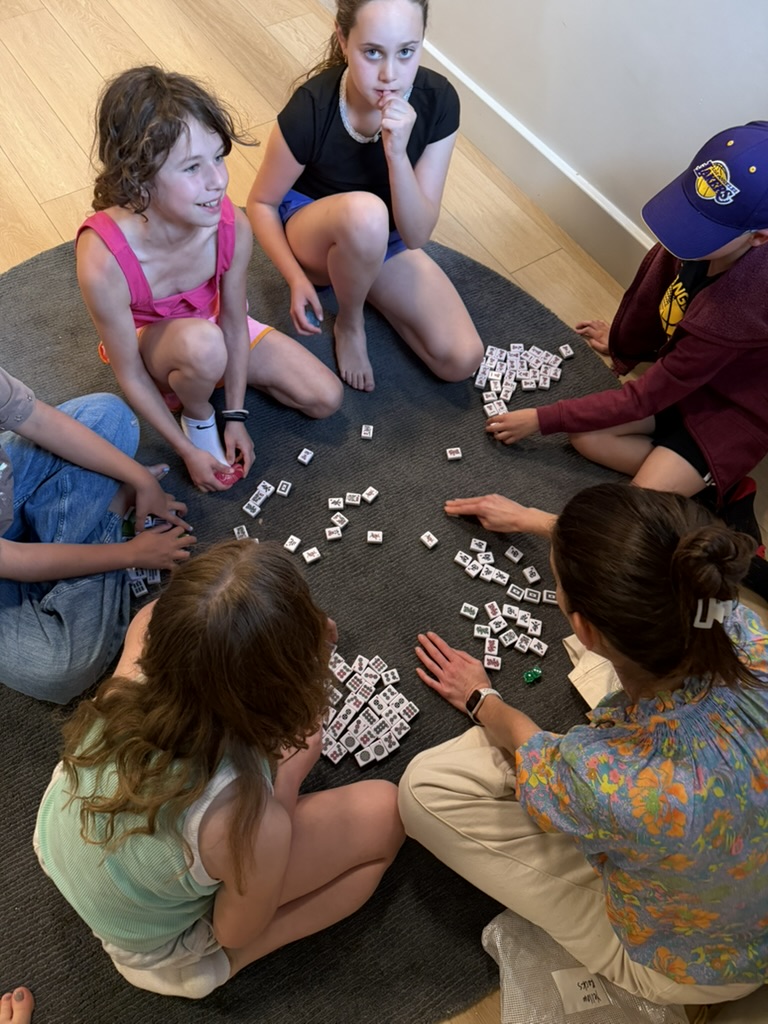
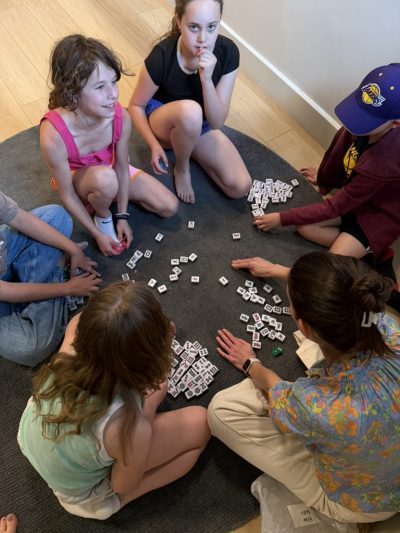
Honestly, it’s the moment a parent realizes their child isn’t “behind” or “difficult” but they just needed the right kind of support, offered the right way. Watching that relief cross a parent’s face, watching them soften into their child instead of worrying about them, never gets old. Those are the moments that remind me why I built this place. And, seeing the kids that come to us class after class and year after year really grow.
Looking ahead, what are you most excited about for Community of Play this year?
I’m excited about deepening the adult and family wellness side of what we offer recognizing that a child thrives when the grown-ups around them are supported too. I’m also excited to keep expanding our class offerings so more families, across more ages and needs, can find their fit here.
